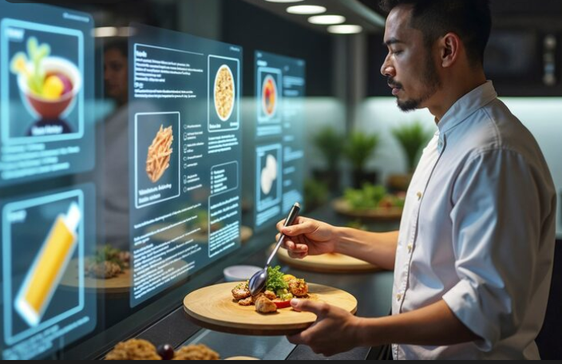
Cloud kitchens and multi-brand food businesses are rapidly reshaping the food service industry by eliminating the need for dine-in spaces and focusing entirely on delivery-based operations. This model allows multiple brands to operate from a single kitchen infrastructure, reducing costs while increasing scalability. However, managing such operations involves handling complex workflows including order aggregation, inventory tracking, recipe management, and financial monitoring. ERPNext emerges as a powerful solution that unifies all these operations into one centralized system, enabling businesses to achieve efficiency and accuracy. With increasing competition in the food delivery ecosystem, having a structured system becomes essential rather than optional. ERPNext helps businesses gain real-time insights into every aspect of their operations, ensuring quick decision-making and improved service quality. This blog explores in-depth how ERPNext transforms cloud kitchens and multi-brand food businesses through advanced features and automation. Each section provides detailed explanations to help you understand its practical applications in real-world scenarios. Whether you are starting a new cloud kitchen or scaling an existing one, ERPNext can significantly enhance operational performance. By integrating all business functions, it reduces dependency on manual processes and minimizes errors. Ultimately, ERPNext helps businesses achieve better control, higher profitability, and long-term sustainability in a fast-growing industry.
1. Centralized Operations Management
ERPNext provides a unified platform where all operational activities of a cloud kitchen can be managed seamlessly without relying on multiple disconnected tools or spreadsheets. This centralized system ensures that procurement, inventory, production, order management, and finance are all interconnected, allowing smooth data flow across departments. Instead of switching between different software applications, managers can access everything from a single dashboard, saving time and improving productivity. This integration eliminates communication gaps that often arise when teams use separate systems, thereby enhancing coordination among staff. Real-time updates ensure that every department is aligned with the latest information, reducing delays and operational confusion. For example, when an order is placed, the system automatically updates inventory and triggers production processes without manual intervention. Centralized control also helps business owners monitor operations remotely, which is particularly useful for multi-location cloud kitchens. ERPNext supports role-based access, ensuring that employees only see the data relevant to their responsibilities, thereby maintaining data security and clarity. The system records every transaction systematically, providing a clear audit trail for accountability. This structured approach helps maintain consistency in processes across all brands operating within the same kitchen. It also simplifies training for new employees, as they only need to learn one system instead of multiple tools. With better visibility and control, managers can quickly identify inefficiencies and take corrective actions. Overall, centralized operations management is essential for scaling cloud kitchens efficiently, and ERPNext provides a robust foundation to achieve this.
2. Multi-Brand Management Under One System
Managing multiple food brands within a single kitchen can become highly complex without a structured system, especially when each brand has its own menu, pricing strategy, and target audience. ERPNext simplifies this complexity by allowing businesses to manage all brands under one unified platform while maintaining clear separation between them. Each brand can have its own identity, including customized menus, pricing structures, and promotional strategies, without interfering with other brands. The system enables separate tracking of sales, expenses, and profitability for each brand, providing detailed insights into their individual performance. This helps business owners identify which brands are performing well and which require improvement or strategic changes. Inventory can be shared across multiple brands while maintaining accurate allocation and consumption tracking, ensuring efficient resource utilization. ERPNext also supports brand-wise reporting, making it easier to analyze trends and make data-driven decisions. Adding new brands becomes a smooth process, allowing businesses to experiment with new concepts without disrupting existing operations. The system reduces operational confusion by clearly defining workflows for each brand, ensuring consistency and efficiency. Marketing efforts can be optimized based on performance data, helping businesses focus on high-performing brands. Financial management becomes more accurate as revenues and costs are properly segmented. This structured approach allows businesses to scale their multi-brand operations confidently. By maintaining clarity and organization, ERPNext ensures that each brand operates efficiently while benefiting from shared infrastructure. Overall, it transforms multi-brand management into a streamlined and scalable process.
3. Real-Time Order Management
In cloud kitchens, where orders are received from multiple platforms such as food delivery apps and direct online channels, managing orders efficiently is critical to success. ERPNext provides a real-time order management system that captures and processes orders instantly without requiring manual entry. This automation reduces human errors and significantly speeds up order handling, ensuring that customers receive their food on time. As soon as an order is placed, it is reflected in the system and assigned to the kitchen for preparation, enabling seamless workflow execution. Kitchen staff receive immediate notifications, allowing them to prioritize and manage orders effectively during peak hours. The system also tracks order status at every stage, from preparation to dispatch, providing complete visibility to both staff and management. Integration with delivery platforms ensures that order information flows smoothly between systems, reducing delays and miscommunication. Customers benefit from timely updates about their order status, improving overall satisfaction and trust. ERPNext stores detailed order data, which can be analyzed to identify trends such as peak hours, popular items, and customer preferences. This data-driven approach helps businesses optimize their operations and improve service quality. Real-time visibility allows managers to make quick decisions in case of delays or bottlenecks. The system also ensures that no order is missed, even during high-demand periods. By automating and streamlining the entire order lifecycle, ERPNext enhances operational efficiency and customer experience. Ultimately, it plays a crucial role in maintaining consistency and reliability in cloud kitchen operations.
4. Smart Inventory Control
Inventory management is one of the most critical aspects of running a cloud kitchen, as it directly impacts cost control, food quality, and operational efficiency. ERPNext provides a smart inventory control system that tracks stock levels in real time, ensuring that businesses always have the right ingredients available when needed. Every transaction, whether it is a purchase, consumption, or wastage, is automatically recorded, providing accurate and up-to-date inventory data. The system generates alerts when stock levels fall below predefined thresholds, enabling timely procurement and preventing disruptions in kitchen operations. Batch tracking allows businesses to monitor expiry dates of perishable items, reducing the risk of using expired ingredients and maintaining food safety standards. ERPNext also helps in analyzing consumption patterns, allowing businesses to forecast demand and plan purchases more effectively. By minimizing overstocking and wastage, the system contributes to better cost management and improved profitability. Multi-warehouse support enables businesses to manage inventory across different locations efficiently. The system enhances accountability by tracking stock movements and identifying discrepancies. Manual errors, which are common in traditional inventory management methods, are significantly reduced through automation. Detailed reports provide insights into inventory performance, helping businesses optimize their stock management strategies. With better control over inventory, kitchens can operate smoothly without interruptions. ERPNext ensures that resources are utilized efficiently, supporting sustainable and cost-effective operations. Overall, smart inventory control is a key factor in the success of cloud kitchens, and ERPNext delivers it effectively.
5. Recipe & Production Planning (BOM)
Consistency in food quality is essential for building a strong brand reputation, especially in a competitive cloud kitchen environment. ERPNext addresses this requirement through its Bill of Materials (BOM) feature, which allows businesses to define detailed recipes for each dish. These recipes include exact quantities of ingredients, ensuring that every order is prepared with the same quality and taste. The system automatically calculates the required ingredients based on incoming orders, helping in accurate production planning and reducing wastage. This structured approach ensures that kitchen staff follow standardized procedures, minimizing variations in food preparation. ERPNext also enables precise costing of each dish by linking ingredient costs to the BOM, allowing businesses to analyze profitability effectively. Production schedules can be created to manage workload efficiently, especially during peak hours. The system improves coordination between inventory and kitchen teams by ensuring that required ingredients are available before production begins. Any changes in recipes can be updated instantly, ensuring that all staff follow the latest standards. This flexibility supports innovation and menu optimization without disrupting operations. ERPNext also provides insights into production efficiency, helping businesses identify areas for improvement. By maintaining consistency and control, it enhances customer satisfaction and brand reliability. The automation of production planning reduces manual effort and increases operational accuracy. Overall, ERPNext transforms recipe management and production planning into a streamlined and efficient process for cloud kitchens.
6. Procurement & Supplier Management
Efficient procurement is critical for cloud kitchens as ingredient availability directly impacts daily operations and order fulfillment timelines. ERPNext provides a structured procurement system that helps businesses manage supplier relationships, purchase orders, and material inflow in a streamlined manner. The system allows businesses to maintain a centralized supplier database, including pricing details, lead times, and past transaction history, enabling informed decision-making. Purchase orders can be generated automatically based on inventory thresholds, ensuring that stock is replenished before it runs out. This automation reduces the risk of last-minute shortages that can disrupt kitchen operations. ERPNext also supports supplier-wise comparison, allowing businesses to choose the most cost-effective and reliable vendors. The system records every purchase transaction, ensuring transparency and accountability in procurement processes. Integration with inventory ensures that received goods are updated instantly, eliminating manual entry errors. Businesses can track pending orders and delivery timelines to ensure timely supply chain execution. The platform also supports bulk purchasing strategies, helping reduce costs through better negotiation and planning. Procurement reports provide insights into spending patterns and supplier performance. This enables businesses to identify inefficiencies and optimize sourcing strategies. With better supplier coordination, kitchens can maintain consistent quality in ingredients. ERPNext also ensures compliance with procurement policies and approval workflows. Overall, it transforms procurement into a proactive and well-managed function within cloud kitchens.
7. Costing & Profitability Analysis
Understanding the true cost of each dish and overall business profitability is essential for sustaining and scaling a cloud kitchen operation. ERPNext provides advanced costing mechanisms that capture every expense associated with food production, including raw materials, labor, and overhead costs. By linking ingredient consumption with recipes, the system calculates accurate dish-level costing, enabling precise pricing decisions. This helps businesses avoid underpricing or overpricing their menu items, ensuring competitiveness and profitability. ERPNext also allows tracking of operational expenses such as utilities, packaging, and delivery costs, giving a comprehensive view of total expenditure. Profitability can be analyzed at multiple levels, including individual dishes, brands, and overall business performance. The system generates detailed financial reports that help identify high-margin and low-margin products. This insight enables businesses to optimize their menu by promoting profitable items and revising or removing underperforming ones. ERPNext supports real-time financial tracking, allowing managers to monitor profitability continuously rather than relying on periodic reports. Cost fluctuations in ingredients can be tracked and reflected in pricing strategies. This ensures that businesses maintain stable profit margins despite market changes. The system also helps in budgeting and financial planning by providing accurate historical data. With better financial visibility, decision-making becomes more strategic and data-driven. ERPNext ultimately empowers cloud kitchens to achieve financial stability and sustainable growth.
8. Integration with Food Delivery Platforms
Cloud kitchens rely heavily on third-party food delivery platforms for order generation, making seamless integration a crucial requirement. ERPNext supports integration with popular delivery platforms, enabling automatic synchronization of orders, menus, and pricing. This eliminates the need for manual data entry, reducing errors and saving valuable time for staff. Orders received from multiple platforms are consolidated into a single system, allowing efficient management and processing. Menu updates can be reflected across all platforms simultaneously, ensuring consistency and avoiding discrepancies. The system also captures customer data from these platforms, enabling better analysis of customer behavior and preferences. Real-time order synchronization ensures that kitchen operations run smoothly without delays or confusion. ERPNext helps track platform-wise sales performance, allowing businesses to identify which channels generate the most revenue. This insight helps in optimizing marketing and promotional strategies. Integration also ensures accurate financial reconciliation by matching platform payments with recorded sales. Businesses can manage commissions and fees associated with delivery platforms effectively. The system improves coordination between kitchen operations and delivery logistics. By reducing manual intervention, it enhances operational efficiency and reliability. ERPNext ensures that cloud kitchens can handle high order volumes without compromising service quality. Overall, it creates a seamless connection between internal operations and external sales channels.
9. Workforce & Staff Management
Managing staff efficiently is crucial in a cloud kitchen environment where coordination between multiple teams determines overall performance. ERPNext provides a comprehensive workforce management system that helps track employee roles, attendance, and productivity. The system allows businesses to define specific roles and responsibilities for each staff member, ensuring clarity in operations. Attendance tracking can be automated, reducing manual errors and improving accountability. ERPNext also supports shift management, enabling businesses to allocate staff effectively during peak and non-peak hours. Payroll processing is integrated within the system, ensuring accurate salary calculations based on attendance and performance. Employee performance can be monitored through task tracking and productivity analysis. This helps managers identify high-performing staff as well as areas that require improvement. Training and onboarding processes can be standardized using the system, ensuring consistency in staff performance. ERPNext also maintains employee records, including personal details and work history, in a secure manner. The system enhances communication between management and staff through centralized information sharing. By reducing administrative workload, it allows managers to focus on operational improvements. Workforce planning becomes more efficient with data-driven insights. Overall, ERPNext ensures that staff management is organized, transparent, and aligned with business goals.
10. Real-Time Analytics & Reporting
Data-driven decision-making is essential for the success of cloud kitchens, where operational efficiency and customer satisfaction depend on timely insights. ERPNext provides powerful analytics and reporting tools that deliver real-time data across all business functions. Managers can access dashboards that display key performance indicators such as sales, inventory levels, order volumes, and profitability. This real-time visibility enables quick identification of trends and potential issues. Custom reports can be generated based on specific business requirements, providing deeper insights into operations. ERPNext allows businesses to analyze customer preferences, helping in menu optimization and targeted marketing strategies. Inventory reports help track consumption patterns and prevent stock shortages. Financial reports provide a clear picture of revenue, expenses, and overall profitability. The system also supports comparative analysis, enabling businesses to evaluate performance over different time periods. This helps in identifying growth patterns and planning future strategies. Automated reporting reduces the time and effort required for manual data compilation. Decision-makers can rely on accurate and up-to-date information for strategic planning. The system also supports exporting reports for external analysis or sharing with stakeholders. By providing comprehensive insights, ERPNext enhances operational control and business intelligence. Overall, real-time analytics and reporting empower cloud kitchens to operate more efficiently and competitively.
11. Customer Data & CRM Management
In a cloud kitchen environment where direct customer interaction is limited, managing customer data effectively becomes essential for building long-term relationships and improving retention. ERPNext includes a built-in CRM system that captures customer information from multiple order channels, including direct orders and integrated delivery platforms. This centralized database allows businesses to store customer details such as order history, preferences, and contact information in an organized manner. By analyzing this data, businesses can identify repeat customers and understand their buying behavior more accurately. ERPNext enables segmentation of customers based on various criteria such as frequency of orders, spending patterns, and preferred cuisines. This segmentation allows targeted marketing campaigns that are more personalized and effective. The system also helps track customer feedback and complaints, ensuring that issues are addressed promptly and service quality is maintained. Loyalty programs can be managed within the system, encouraging repeat purchases and enhancing customer engagement. ERPNext provides insights into customer lifetime value, helping businesses focus on high-value customers. Communication with customers can be streamlined through automated notifications and updates. The system ensures that all customer interactions are recorded for future reference and analysis. With better customer understanding, businesses can improve their menu offerings and service strategies. This data-driven approach enhances customer satisfaction and brand loyalty. Overall, ERPNext transforms customer data into a valuable asset for growth and retention in cloud kitchens.
12. Quality Control & Food Safety Compliance
Maintaining high standards of food quality and safety is critical for cloud kitchens to ensure customer trust and regulatory compliance. ERPNext provides tools that help businesses implement structured quality control processes across all stages of food preparation and handling. The system allows businesses to define quality parameters for ingredients, ensuring that only approved materials are used in production. Batch tracking and expiry date management help prevent the use of expired or substandard ingredients. ERPNext supports inspection processes where incoming materials can be checked against predefined quality standards before being accepted into inventory. This reduces the risk of contamination and ensures consistency in food quality. The system also helps maintain proper documentation for compliance with food safety regulations, which is essential for audits and certifications. Standard operating procedures can be documented and followed consistently across all kitchen operations. ERPNext enables tracking of hygiene practices and staff compliance with safety guidelines. Any deviations or issues can be recorded and addressed promptly. The system also supports traceability, allowing businesses to track ingredients from procurement to final dish preparation. This is crucial in case of quality issues or recalls. By maintaining strict quality control, businesses can build trust with customers and avoid reputational risks. ERPNext ensures that food safety is not compromised at any stage of operations. Overall, it provides a structured approach to maintaining high-quality standards in cloud kitchens.
13. Menu Engineering & Optimization
Menu engineering plays a crucial role in maximizing profitability and customer satisfaction in cloud kitchens, where menu design directly impacts sales performance. ERPNext provides detailed insights into menu performance by analyzing sales data, customer preferences, and profitability metrics. Businesses can identify which dishes are popular and generate high margins, as well as those that underperform. This information helps in optimizing the menu by promoting high-performing items and revising or removing less profitable ones. ERPNext allows businesses to experiment with new dishes and track their performance in real time. Pricing strategies can be adjusted based on cost analysis and market demand, ensuring competitiveness and profitability. The system also helps in identifying seasonal trends and customer preferences, enabling dynamic menu updates. By linking menu items with inventory and recipes, ERPNext ensures that ingredient availability aligns with menu offerings. This prevents situations where listed items cannot be prepared due to stock shortages. The system supports multi-brand menu management, allowing each brand to have its own optimized menu. Detailed reports provide insights into contribution margins and sales trends. This helps businesses make informed decisions about menu changes. ERPNext enables continuous improvement of menu strategies based on data rather than assumptions. With better menu optimization, businesses can enhance customer satisfaction and increase revenue. Overall, it transforms menu management into a strategic and data-driven process.
14. Delivery & Logistics Coordination
Efficient delivery and logistics management are essential for cloud kitchens, as timely delivery directly impacts customer satisfaction and brand reputation. ERPNext helps coordinate delivery operations by integrating order management with dispatch processes, ensuring smooth workflow execution. The system allows businesses to track orders from preparation to delivery, providing complete visibility into the logistics process. Delivery assignments can be managed efficiently, ensuring that orders are dispatched promptly and accurately. ERPNext also supports integration with third-party delivery partners, enabling seamless coordination between kitchen operations and delivery services. Real-time tracking allows businesses to monitor delivery status and address any delays proactively. The system helps optimize delivery routes and schedules, improving efficiency and reducing delivery time. Accurate tracking of delivery performance helps identify bottlenecks and areas for improvement. ERPNext also supports managing delivery costs, ensuring that logistics expenses are controlled effectively. Customers benefit from timely updates and accurate delivery timelines, enhancing their overall experience. The system ensures that orders are delivered in the correct sequence, avoiding confusion during peak hours. By improving coordination between kitchen and delivery teams, ERPNext enhances operational efficiency. It also helps maintain consistency in service quality across all orders. Overall, ERPNext plays a vital role in streamlining delivery and logistics for cloud kitchens.
15. Financial Accounting & Compliance
Financial management is a critical aspect of running a cloud kitchen, where accurate tracking of revenue, expenses, and compliance requirements is essential for sustainability. ERPNext provides a comprehensive accounting system that integrates seamlessly with all operational modules, ensuring accurate financial data. Every transaction, including sales, purchases, and expenses, is recorded automatically, reducing manual errors and improving accuracy. The system supports multi-brand financial tracking, allowing businesses to analyze profitability for each brand separately. ERPNext generates financial statements such as profit and loss accounts, balance sheets, and cash flow reports in real time. This helps business owners monitor financial performance continuously. The system also ensures compliance with tax regulations by automating calculations and maintaining proper records. GST and other tax-related processes can be managed efficiently within the platform. ERPNext supports budgeting and financial planning, helping businesses allocate resources effectively. Audit trails ensure transparency and accountability in financial transactions. The system also enables integration with banking processes for smooth financial operations. By providing clear financial insights, ERPNext helps businesses make informed decisions. It reduces the complexity of managing finances in multi-brand operations. With better financial control, businesses can ensure long-term growth and stability. Overall, ERPNext simplifies accounting and ensures compliance for cloud kitchens.
16. Multi-Location Kitchen Management
As cloud kitchen businesses expand, managing multiple kitchen locations becomes increasingly complex and requires a centralized yet flexible system to maintain consistency and efficiency. ERPNext enables businesses to manage multiple kitchen units from a single platform while maintaining location-specific control over operations. Each kitchen can have its own inventory, staff, and operational workflows, ensuring that local requirements are met without affecting overall business structure. The system provides location-wise reporting, allowing managers to analyze performance across different kitchens and identify areas for improvement. This helps businesses standardize processes while accommodating regional variations in demand and operations. ERPNext also supports inter-location stock transfers, ensuring optimal utilization of resources across kitchens. Real-time visibility into operations at each location allows business owners to monitor performance remotely and make informed decisions. The system ensures that all locations follow consistent quality and operational standards. It also simplifies the process of scaling operations by providing a structured framework for adding new kitchens. Training and onboarding processes can be standardized across locations, ensuring uniform staff performance. Financial tracking can be managed at both individual location and consolidated levels. ERPNext reduces the complexity of managing multiple kitchens by integrating all operations into one system. This centralized approach improves efficiency and reduces operational risks. Overall, ERPNext provides a scalable solution for managing multi-location cloud kitchen businesses effectively.
17. Automation of Daily Operations
Automation plays a crucial role in improving efficiency and reducing manual workload in cloud kitchens, where operations are fast-paced and repetitive tasks are common. ERPNext automates various daily processes such as order processing, inventory updates, procurement, and financial entries, ensuring smooth workflow execution. This reduces the dependency on manual intervention, minimizing errors and saving time for staff. Automated alerts and notifications ensure that important tasks such as stock replenishment and order processing are not overlooked. The system also automates data synchronization across modules, ensuring consistency and accuracy in information. Workflow automation allows businesses to define approval processes and standard operating procedures, ensuring compliance and accountability. ERPNext helps streamline communication between departments by providing real-time updates and notifications. Automation also improves response time, enabling businesses to handle high order volumes efficiently. By reducing repetitive tasks, staff can focus on more critical activities such as quality control and customer service. The system enhances productivity by eliminating inefficiencies in manual processes. Automated reporting reduces the effort required for data compilation and analysis. ERPNext ensures that operations run smoothly even during peak demand periods. This leads to improved service quality and customer satisfaction. Overall, automation is a key driver of efficiency in cloud kitchens, and ERPNext delivers it effectively.
18. Data Security & Role-Based Access
In a digital business environment, protecting sensitive data and ensuring secure access to information is essential for maintaining trust and operational integrity. ERPNext provides robust data security features that help safeguard business information from unauthorized access and potential breaches. The system supports role-based access control, allowing businesses to define specific permissions for each user based on their responsibilities. This ensures that employees only have access to the data necessary for their roles, reducing the risk of data misuse. ERPNext also maintains detailed audit logs, tracking every action performed within the system for accountability and transparency. Secure authentication mechanisms help prevent unauthorized access and ensure data integrity. The system supports data backups, ensuring that critical information can be restored in case of system failures or data loss. ERPNext also complies with industry standards for data security, providing confidence to businesses and stakeholders. By maintaining strict control over data access, businesses can prevent internal and external security threats. The system also helps in managing sensitive financial and customer data securely. With centralized data storage, information is protected from inconsistencies and duplication. ERPNext ensures that security measures are integrated into all aspects of operations. This reduces risks and enhances reliability. Overall, it provides a secure environment for managing cloud kitchen operations.
19. Scalability & Business Expansion
Scalability is a key requirement for cloud kitchens aiming to grow and expand their operations in a competitive market. ERPNext provides a flexible and scalable platform that supports business growth without requiring major system changes. As businesses expand by adding new brands, locations, or services, ERPNext can accommodate these changes seamlessly. The system allows easy configuration of new modules and features based on evolving business needs. This ensures that businesses can adapt quickly to market demands and opportunities. ERPNext supports high transaction volumes, enabling businesses to handle increased order loads without performance issues. The platform also allows integration with third-party tools and services, enhancing its capabilities further. By providing a strong technological foundation, ERPNext enables businesses to scale operations efficiently. The system reduces the complexity of expansion by maintaining structured processes and workflows. Financial and operational data can be consolidated across all units, providing a clear view of overall business performance. ERPNext also supports multi-currency and multi-company operations, making it suitable for international expansion. With better control and visibility, businesses can expand confidently without compromising efficiency. The system ensures that growth is sustainable and well-managed. Overall, ERPNext is an ideal solution for scaling cloud kitchen businesses.
20. Competitive Advantage Through Digital Transformation
In the highly competitive cloud kitchen industry, leveraging technology effectively can provide a significant advantage over competitors. ERPNext enables digital transformation by integrating all business functions into a single, efficient platform, allowing businesses to operate with greater speed and accuracy. By automating processes and providing real-time insights, the system helps businesses respond quickly to market changes and customer demands. This agility is crucial for staying ahead in a rapidly evolving industry. ERPNext also enhances decision-making by providing data-driven insights across all aspects of operations. Businesses can identify trends, optimize processes, and implement strategies more effectively. The system improves customer experience by ensuring timely order fulfillment and consistent product quality. By reducing operational inefficiencies, businesses can focus on innovation and growth. ERPNext also supports continuous improvement through regular updates and feature enhancements. The platform enables businesses to adopt best practices and stay aligned with industry standards. With improved efficiency and control, businesses can achieve higher profitability and sustainability. Digital transformation also enhances brand reputation and customer trust. ERPNext provides the tools needed to compete effectively in a dynamic market. Overall, it empowers cloud kitchens to achieve long-term success through technology-driven operations.
Conclusion
ERPNext has emerged as a powerful and comprehensive solution for managing cloud kitchens and multi-brand food operations in an increasingly competitive and fast-paced industry. By integrating all core business functions such as inventory management, order processing, production planning, financial accounting, and customer relationship management into a single platform, it eliminates the inefficiencies associated with fragmented systems. The ability to manage multiple brands and locations from a centralized system provides businesses with the control and flexibility needed to scale operations effectively. Real-time data visibility and advanced analytics enable informed decision-making, helping businesses optimize performance and improve profitability. Automation of routine tasks reduces manual workload and minimizes errors, allowing staff to focus on delivering quality service. ERPNext also ensures compliance with regulatory requirements and maintains high standards of data security and food safety. Its scalability makes it suitable for both small startups and large, expanding cloud kitchen businesses. By adopting ERPNext, businesses can streamline operations, enhance customer satisfaction, and gain a competitive edge in the market. The system not only addresses current operational challenges but also prepares businesses for future growth and innovation. In a digital-first world, having a robust ERP system is no longer optional but essential for success. ERPNext provides the foundation needed to build efficient, scalable, and sustainable cloud kitchen operations. Ultimately, it empowers businesses to transform their processes and achieve long-term success in the evolving food industry.