5 Common ERP Implementation Mistakes and How to Avoid Them - A Complete Guide to Successful ERP Deployment
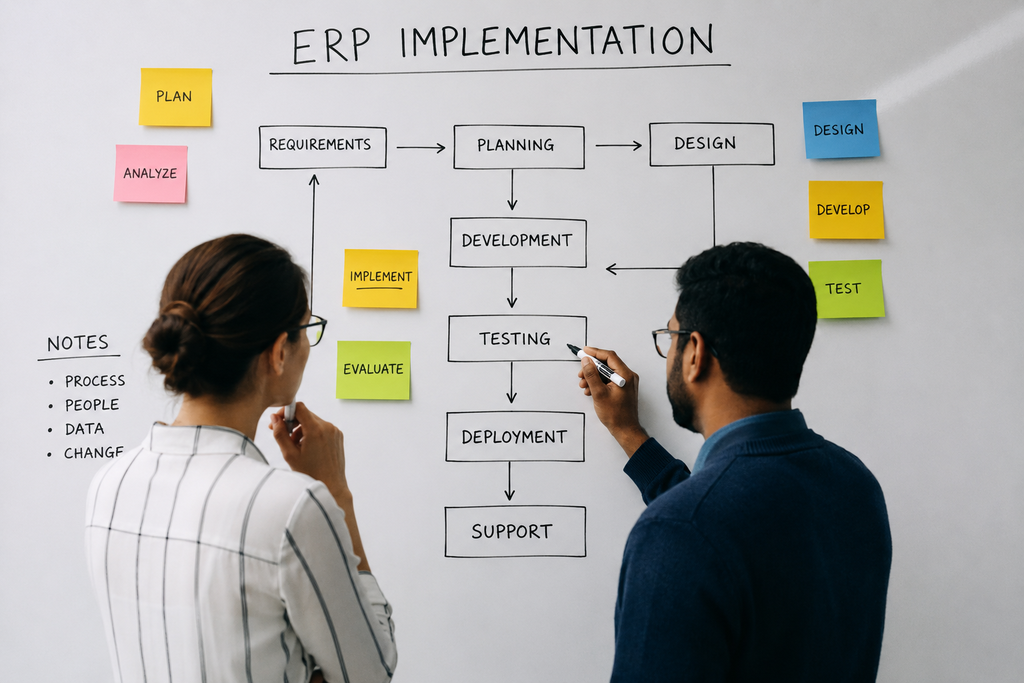
Implementing an Enterprise Resource Planning (ERP) system is one of the most transformative decisions a business can make. In today's competitive business landscape, organizations need more than standalone software for accounting, inventory, sales, purchasing, human resources, and customer relationship management. They require an integrated platform that connects every department, provides real-time visibility into operations, and enables faster, data-driven decision-making. This is where ERP systems become invaluable. However, while the benefits of ERP are immense, the implementation journey is often challenging. Industry studies consistently show that many ERP projects experience delays, exceed budgets, or fail to deliver the expected return on investment—not because the software is inadequate, but because of avoidable implementation mistakes.Whether you are implementing ERPNext or any other ERP solution, understanding the common pitfalls before beginning your project can save significant time, money, and effort. Successful ERP implementation is not simply a software installation; it is a business transformation that requires careful planning, collaboration, training, and continuous improvement. In this comprehensive guide, we explore five of the most common ERP implementation mistakes and provide practical strategies to avoid them, helping your organization achieve a smooth and successful deployment.
Understanding Why ERP Implementations Fail
An ERP implementation touches nearly every aspect of an organization. Employees must adapt to new workflows, departments must standardize processes, and management must oversee changes that impact daily operations. Unlike implementing a single software application, an ERP system becomes the central nervous system of the business, connecting finance, inventory, procurement, manufacturing, sales, customer service, and human resources.
When organizations underestimate the complexity of this transformation, implementation challenges begin to emerge. Poor planning, inadequate communication, lack of executive involvement, insufficient user training, and rushed deployment schedules often lead to reduced productivity, employee frustration, inaccurate reporting, and higher implementation costs.Fortunately, these challenges are avoidable when organizations understand the risks and prepare accordingly.
1. Beginning Without Clearly Defined Business Objectives
One of the most common reasons ERP implementations struggle is that businesses begin the project without clearly defining why they are implementing an ERP system. Many organizations decide to adopt ERP because competitors have done so, because their existing software is outdated, or because management believes digital transformation is necessary. While these reasons may initiate the conversation, they are not sufficient to guide a successful implementation.
Without clear objectives, different departments often have conflicting expectations. Finance may expect faster month-end closing, sales teams may want improved customer tracking, warehouse managers may prioritize inventory accuracy, while executives expect comprehensive business intelligence. Without aligning these expectations into measurable goals, the project can quickly become disorganized.Clearly defined objectives help determine implementation priorities, allocate resources effectively, and measure success after deployment. Examples of measurable objectives include reducing inventory discrepancies by 30%, shortening procurement cycles by 20%, improving order fulfillment accuracy, eliminating duplicate data entry, or reducing financial closing time from ten days to three days.Organizations should conduct detailed workshops with stakeholders from every department before implementation begins. Understanding existing business processes, identifying operational bottlenecks, and documenting future requirements create a solid foundation for ERP success.
2. Neglecting Data Quality and Data Migration Planning
Data migration is often one of the most underestimated phases of an ERP implementation. Businesses frequently assume that transferring customer records, inventory details, supplier information, employee records, and financial transactions into the new system is a straightforward technical task. In reality, poor-quality data is one of the biggest causes of ERP implementation problems.Years of using spreadsheets, disconnected software, and manual record-keeping often result in duplicate customers, inactive suppliers, inconsistent item naming conventions, missing product information, outdated pricing, incorrect inventory quantities, and inaccurate financial records. Migrating this data directly into the new ERP simply transfers existing problems into a modern system.
Poor data quality affects every department. Sales representatives may contact duplicate customers. Procurement teams may purchase incorrect materials. Finance departments may struggle with inaccurate reporting. Warehouse operations may experience stock discrepancies, resulting in delayed customer deliveries and increased operational costs.A successful data migration strategy begins months before the actual migration process. Organizations should clean existing databases, remove duplicate records, validate customer and supplier information, standardize product codes, reconcile inventory balances, and verify accounting records. Performing multiple trial migrations helps identify potential issues before the final system goes live.Data migration should never be viewed as an IT responsibility alone. Every department must participate in validating its own information to ensure accuracy and completeness.
3. Underestimating Employee Training and Change Management
Technology alone cannot transform a business. The people using the technology determine whether an ERP implementation succeeds or fails. One of the biggest mistakes organizations make is assuming employees will naturally adapt to the new system after a brief demonstration or a few training sessions.ERP implementation changes how employees perform their daily work. Manual spreadsheets are replaced by automated workflows. Paper approvals become digital processes. Employees who previously worked independently now share information across departments. These changes often create uncertainty, resistance, and anxiety if not managed properly.
Many employees resist ERP implementation not because they dislike technology, but because they fear making mistakes, losing efficiency during the transition, or having their roles significantly altered. Without proper communication, employees may continue using old processes alongside the new ERP, reducing data accuracy and preventing the organization from realizing the full benefits of the system.Effective change management begins long before the ERP goes live. Management should explain why the organization is implementing ERP, how it will benefit employees, and what changes they can expect. Employees should participate in requirement gathering, testing, and process improvement discussions, making them active contributors rather than passive users.Training should also be role-specific rather than generic. Finance teams require different knowledge than warehouse operators or sales representatives. Providing hands-on practice with realistic business scenarios significantly improves user confidence and system adoption.Continuous post-implementation support is equally important. Dedicated support teams, user documentation, refresher training sessions, and open communication channels encourage employees to embrace the new system rather than avoid it.
4. Over-Customizing the ERP System
One of the greatest advantages of ERPNext is its flexibility. Businesses can customize forms, workflows, reports, dashboards, fields, and automation to suit their specific operational needs. However, excessive customization often becomes one of the most expensive mistakes during implementation.Many organizations attempt to replicate every feature and workflow from their previous systems instead of evaluating whether existing processes remain efficient. Developers spend months creating complex customizations that may become difficult to maintain, expensive to upgrade, and incompatible with future ERP releases.Over-customization also increases implementation timelines and project costs. Every additional customization requires development, testing, documentation, user training, and future maintenance. As the number of customizations grows, system complexity increases, making troubleshooting significantly more difficult.
Instead of customizing every business process, organizations should first evaluate whether the ERP's standard functionality already supports industry best practices. Modern ERP systems are designed based on thousands of successful business implementations across various industries. Adopting these proven workflows often improves operational efficiency while reducing implementation complexity.Customizations should only be introduced when they provide measurable business value or support unique operational requirements that cannot be addressed through standard ERP functionality.
5. Rushing the Go-Live Without Comprehensive Testing
After months of implementation work, organizations often feel pressure to launch the ERP system as quickly as possible. Tight project deadlines, budget constraints, or management expectations sometimes result in shortened testing phases or incomplete user acceptance testing. Unfortunately, rushing the go-live process frequently leads to operational disruptions that could have been avoided.ERP systems integrate multiple business functions. A small configuration error in inventory management can affect purchasing, production planning, accounting, and customer deliveries simultaneously. Similarly, incorrect tax settings can impact invoicing, financial reporting, and regulatory compliance.Comprehensive testing ensures every workflow functions correctly before employees begin daily operations. Testing should cover purchasing, sales, manufacturing, inventory transactions, payroll processing, accounting entries, reporting, integrations with third-party applications, and user permissions.
User Acceptance Testing (UAT) is particularly important because it allows actual employees to perform their routine tasks using the ERP system before deployment. Their feedback helps identify usability issues, missing configurations, or workflow improvements that technical teams may overlook.Many organizations also benefit from conducting pilot implementations within a single department or business unit before expanding the ERP across the entire organization. This phased approach reduces implementation risk while allowing teams to gain practical experience.Even after the official go-live, organizations should provide dedicated support teams to resolve issues quickly, answer user questions, and monitor system performance during the stabilization period.
Additional Best Practices for a Successful ERP Implementation
Beyond avoiding these five common mistakes, several best practices can significantly improve ERP implementation outcomes. Executive leadership should remain actively involved throughout the project, providing direction, resolving conflicts, and ensuring organizational commitment. A cross-functional implementation team should include representatives from finance, sales, purchasing, inventory, manufacturing, HR, and IT to ensure every department's requirements are addressed.Organizations should establish realistic project timelines rather than attempting to implement every module simultaneously. A phased implementation approach allows teams to adapt gradually while minimizing operational disruption.
Communication should remain transparent throughout the project. Employees should receive regular updates regarding implementation progress, upcoming changes, training schedules, and expected benefits. Open communication reduces uncertainty and builds organizational confidence.Continuous performance monitoring after implementation is equally important. Measuring key performance indicators such as inventory accuracy, order fulfillment time, procurement efficiency, financial closing duration, and customer satisfaction helps determine whether the ERP system is delivering the expected business value.
Why ERPNext Is an Excellent Choice for Modern Businesses
ERPNext has become one of the most popular open-source ERP platforms because it combines flexibility, affordability, and comprehensive functionality within a single integrated system. Unlike traditional ERP software that often requires expensive licensing fees, ERPNext enables businesses of all sizes to implement enterprise-grade business management without excessive costs.The platform includes modules for Accounting, CRM, Sales, Purchasing, Inventory, Manufacturing, Human Resources, Payroll, Projects, Asset Management, Quality Management, and Customer Support. Since every module shares a centralized database, information flows seamlessly between departments, eliminating duplicate data entry and improving decision-making.ERPNext also supports workflow automation, customizable dashboards, advanced reporting, mobile accessibility, role-based security, and integration with third-party applications. These capabilities help organizations streamline operations while maintaining flexibility as business requirements evolve.When implemented using industry best practices and supported by experienced implementation partners, ERPNext provides a scalable foundation for long-term business growth.
ERP implementation is far more than a software installation—it is a strategic business transformation that influences every department, employee, and operational process. While ERP projects can be complex, most implementation failures result from preventable mistakes rather than software limitations.Organizations that clearly define business objectives, prioritize data quality, invest in employee training, avoid unnecessary customization, and conduct thorough testing before deployment dramatically increase their chances of success. Strong leadership, effective communication, realistic planning, and continuous improvement further contribute to achieving long-term value from the ERP investment.Whether your business is implementing ERPNext for the first time or upgrading from legacy systems, avoiding these five common mistakes will help ensure a smoother implementation, higher user adoption, improved operational efficiency, and a faster return on investment. By approaching ERP implementation as a structured business transformation rather than simply a technology project, organizations can unlock the full potential of their ERP system and build a stronger foundation for future growth.
📞 Want to explore how ERPNext can support your business growth?
Contact Nexeves today and take the next step toward a smarter ERP journey.


No comments yet. Login to start a new discussion Start a new discussion